The US budget deficit widened 12.2% to $1.992 trillion in fiscal 2026, the largest annual shortfall in five years, as government spending grew faster than record federal revenue.
Treasury data for the year ended 30 September show receipts reached $5.403 trillion while outlays climbed to $7.396 trillion. The resulting gap was $217 billion larger than the $1.775 trillion deficit recorded in fiscal 2025.
US Budget Deficit Reaches $1.992 Trillion
The final Treasury figures closely match the Congressional Budget Office’s $2 trillion estimate released earlier in October. CBO calculated that revenue increased by about $169 billion, or 3%, while spending rose by roughly $386 billion, or 6%.
The deficit equalled an estimated 6.2% of gross domestic product, up from about 5.8% in fiscal 2025. That is a large shortfall for an economy outside a declared recession, and it means the government must keep issuing more Treasury securities to finance the gap.
Treasury’s Monthly Statement data show the scale of the imbalance: $5.403 trillion came in, while $7.396 trillion went out. The department’s receipts and outlays guide explains that the statement records the government’s monthly cash activity on a modified cash basis.
Interest Costs Hit a Record
Debt-service spending was one of the biggest drivers. Reuters reported that debt-service outlays reached a record $1.36 trillion, up $144 billion or 12% from the previous year. Only Social Security and the combined Medicare and Medicaid programmes cost more.
Interest expense rises when the government carries more debt, refinances maturing securities at higher yields, or both. That creates a feedback loop: larger deficits add to borrowing, and the additional borrowing raises future interest costs.
The problem also narrows fiscal choices. Money used to service existing debt cannot simultaneously fund infrastructure, defence, healthcare or tax reductions without adding still more borrowing.
Why Spending Grew Faster Than Revenue
Total receipts still set a record. Individual income and payroll tax collections increased, but the gains were not enough to keep pace with higher spending.
Major contributors to the increase included:
- record debt-service costs;
- higher Social Security and Medicare spending;
- a $48 billion increase in defence outlays; and
- tariff refunds following court decisions affecting earlier duties.
September alone produced a deficit of about $27 billion, reversing a $198 billion surplus in September 2025. Monthly comparisons can be distorted by tax deadlines, benefit-payment timing and one-off refunds, but the full-year numbers show the broader deterioration.
What the $1.99 Trillion Deficit Means for Markets
A bigger deficit does not automatically produce an immediate market sell-off. It does increase the amount of government debt investors must absorb, which can put upward pressure on Treasury yields when demand does not rise at the same pace.
Higher government yields influence borrowing costs across the economy, from mortgages and corporate bonds to equity valuations. BullBuzz’s report on US inflation rising to 3.7% explains why investors are already sensitive to the prospect of higher rates staying in place.
The fiscal figures also arrive as Washington weighs competing economic pressures. The administration has waived new Russia energy tariffs and sanctions that could have disrupted oil trade, while elevated crude prices have already weighed on Asian stocks and inflation expectations.
What Investors Should Watch Next
- Treasury auctions: whether demand remains strong as issuance increases.
- Long-term yields: higher borrowing costs would worsen future interest expense.
- Debt-limit headroom: continued deficits move outstanding debt closer to the statutory ceiling.
- Fiscal policy: whether Congress changes taxes, benefits or discretionary spending after the midterm elections.
- Credit ratings: whether rating agencies become more concerned about the long-term debt path.
The central problem is the gap between growth rates. Federal revenue rose, but spending and interest costs rose faster. Until that relationship changes, record receipts alone will not stop trillion-dollar deficits from adding to the debt burden.
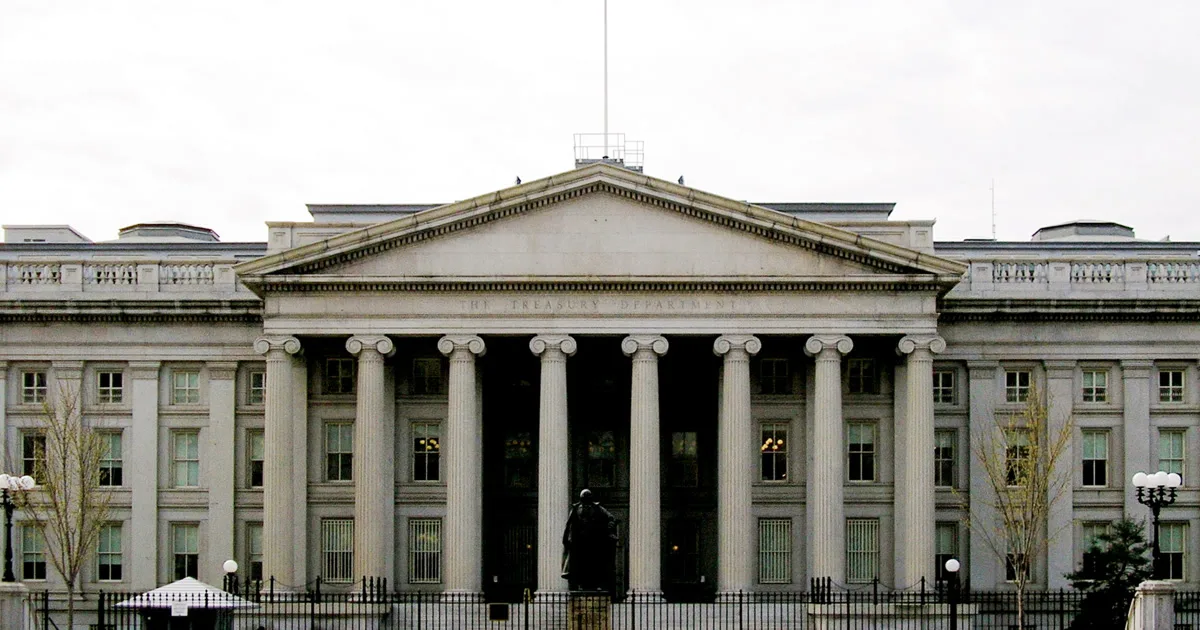
Image: United States Treasury Building in Washington, D.C. Public-domain photograph via Wikimedia Commons.