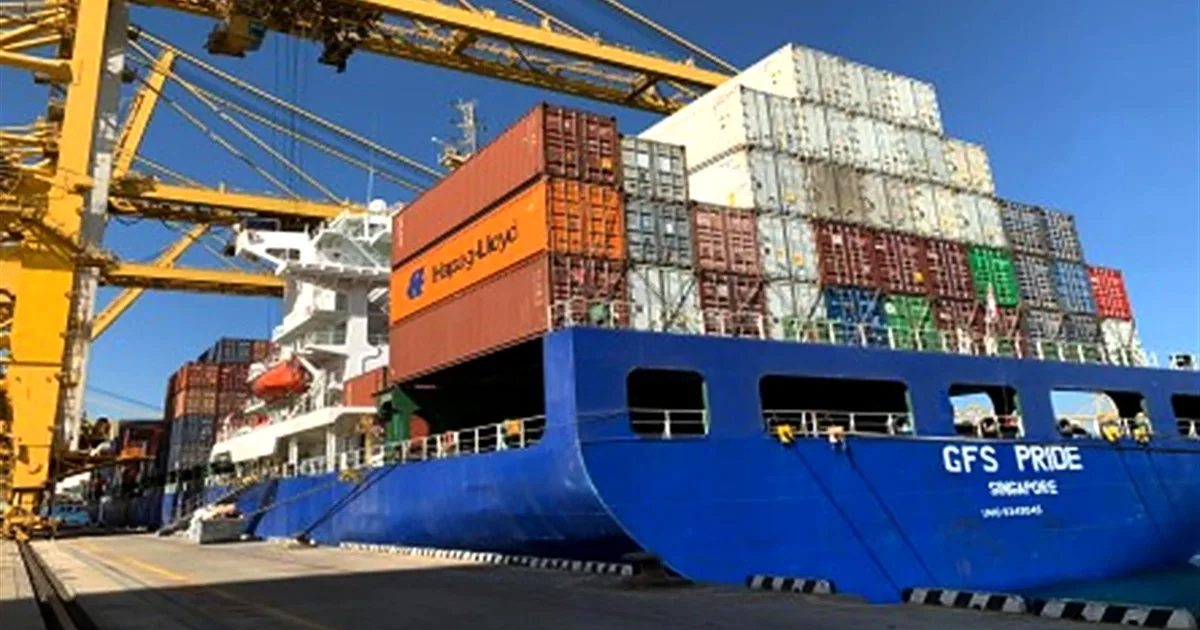
A Singapore-registered cargo ship has sunk after being struck in the Strait of Hormuz, while a second vessel under the Singapore flag reached safe anchorage with hull damage. All 43 crew members from the two ships are safe, according to Singapore's Maritime and Port Authority.
The Maritime and Port Authority of Singapore said GFS Pride and GFS Giselle were hit by unknown projectiles on October 13 and 14 Singapore time. The authority has not identified who launched the attacks.
GFS Pride caught fire after it was damaged and later sank. Its 21 crew members evacuated safely without injuries. GFS Giselle sustained hull damage but remained able to sail to a safe anchorage under its own power. Its 22 crew members were also unharmed. No Singaporeans were aboard either vessel.
What Happened to GFS Pride and GFS Giselle
The two incidents occurred on consecutive days in one of the world's most important shipping corridors. Reuters, citing the Singapore authority, reported that both ships were struck by projectiles whose origin was not immediately established.
The outcome was markedly different for each ship. Fire and damage left GFS Pride beyond recovery, while GFS Giselle retained propulsion despite damage to its hull. Singapore's maritime authority said it was in contact with the vessels' management company and continued to monitor the situation.
MPA condemned the continuing attacks on commercial shipping as unprovoked and unjustifiable. It said such attacks endanger seafarers, threaten freedom of navigation and breach international law.
Sunken Containers Create a New Navigation Hazard
The loss of GFS Pride created an immediate hazard beyond the ship itself. A NAVAREA IX warning issued on October 14 said the vessel had sunk near Ras Shaykh Masud and that containers were floating in the area. Mariners were told to proceed with caution.
Floating containers can be difficult to see, particularly at night or in poor visibility. They may force vessels to slow down or alter course while salvage teams assess the wreck and surrounding debris.
The episode follows other attacks and interdictions affecting cargo traffic in nearby waters. BullBuzz previously reported on a cargo ship disabled in the Gulf of Oman, highlighting how quickly security incidents can disrupt commercial routes across the wider region.
Who Was Behind the Strait of Hormuz Strike?
No attacker has been confirmed by the Singapore authorities. MPA's statement refers only to unknown projectiles, and that remains the most reliable description of the cause.
Seatrade Maritime News reported that Iran's Islamic Revolutionary Guard Corps claimed a container ship hit a mine after entering what it described as an unauthorised route. That claim has not been independently established as the cause of the GFS Pride sinking and differs from MPA's description of a projectile strike.
The distinction matters. Assigning responsibility before evidence is verified could misstate the event and intensify an already volatile security picture.
Why the Strait of Hormuz Matters to Asian Trade
The Strait of Hormuz connects Gulf exporters with the Arabian Sea and global markets. Tankers carry a large share of the world's traded oil through the waterway, while container ships use it to serve ports across the Gulf.
Repeated attacks can affect trade even when crews survive. Shipping companies may reroute vessels, increase security measures or face higher insurance premiums. Those costs can eventually reach importers and consumers through freight rates and energy prices.
Markets are already responding to the wider conflict. BullBuzz reported that Asian stocks fell as oil traded near $106, while a separate attack on a Saudi Aramco building in Dhahran added to concerns about regional energy infrastructure.
What Shipping Companies and Markets Will Watch Next
The immediate priority is the safety of ships approaching the wreck area and the recovery of floating containers. Operators will also watch for updated navigation warnings, damage assessments for GFS Giselle and any verified evidence identifying the weapon or attacker.
For freight and commodity markets, the key question is whether the two strikes mark a further escalation in attacks on commercial shipping. A sustained threat could tighten vessel availability, raise war-risk insurance costs and put additional pressure on oil and freight prices.
For now, the confirmed facts are narrow but serious: GFS Pride has sunk, GFS Giselle was damaged, and all 43 crew members survived. The source of the projectiles remains unconfirmed.
Photo: GFS Pride at port in an archival image published in 2022. This image does not show the October 2026 attack or sinking. Lloyd's List / Rob Willmington. Cropped for display.