Malaysia has approved 27 data-centre projects worth an estimated RM225.97 billion through its federal Data Centre Task Force, concentrating most of the planned investment in Johor and Selangor as demand for artificial-intelligence and cloud infrastructure accelerates.
The approvals were recorded through July 2026, according to a Digital Ministry parliamentary reply reported by Bernama. Sixteen projects are in Johor, 10 in Selangor and one in Negeri Sembilan. One facility has started operating, while the other 26 are still under construction.
The distinction matters for investors and local communities. RM225.97 billion is an approved investment pipeline, not a measure of facilities already generating revenue, jobs or computing capacity.
Malaysia Data Centre Investment Reaches RM225.97 Billion
The 27 projects sit within a broader wave of digital infrastructure spending. The Malaysian Investment Development Authority, or MIDA, said in September that data-centre-related approvals had reached RM385.7 billion from 2021 through the first half of 2026.
Those two figures cover different periods and approval groupings and should not be added together. The RM225.97 billion total refers specifically to projects cleared under the Data Centre Task Force through July, while MIDA's RM385.7 billion figure covers the wider data-centre investment record since 2021.
The latest DCTF portfolio is expected to create 4,053 jobs. Of those, 3,523 are classed as high-skilled positions in electrical and mechanical engineering, networking, cybersecurity, and facility operations and maintenance. The ministry expects Malaysians to fill 89.21% of the high-skilled roles.
Johor Takes the Largest Share of Approved Projects
Johor accounts for 16 of the 27 approvals, or nearly three-fifths of the portfolio. Its proximity to Singapore, available industrial land and growing power and connectivity network have made the state a focal point for hyperscale campuses.
Selangor follows with 10 projects, building on the established digital infrastructure around Cyberjaya, Shah Alam and the wider Klang Valley. Negeri Sembilan has one approved project.
MIDA's first-half investment report showed the same geographic pattern. Selangor attracted RM70 billion in approved investment across sectors during the period, while Johor received RM59.4 billion. Information and communications investment reached RM103.3 billion, with data-centre and cloud-computing projects accounting for RM95.8 billion.
The buildout also connects Malaysia to a wider Asian race for AI capacity. BullBuzz recently reported on NTT Data's talks to host Anthropic's first Japan data centre, while demand for advanced computing is feeding into longer equipment planning at ASML and its chipmaking customers.
Local Content and Skilled Jobs Face a Delivery Test
Projects approved through the task force must meet a minimum local-content requirement of 30%. MIDA will monitor compliance through implementation reports submitted every six months, the Digital Ministry said.
That requirement directs part of the spending toward Malaysian contractors and suppliers in construction, electrical systems, cooling, telecommunications, cybersecurity and logistics. TalentCorp is also developing a Data Centre Facilities Management Programme to train local workers for operations and maintenance roles.
The headline investment value is large relative to the projected permanent workforce. That makes the quality, pay and local share of the 4,053 jobs central to judging the economic return. Construction activity can create a wider short-term effect, while operating facilities typically rely on smaller specialist teams.
Power and Water Capacity Shape What Gets Built
Malaysia's data-centre expansion also raises questions about electricity, water and land use. The DCTF, co-chaired by the Investment, Trade and Industry Ministry and the Digital Ministry, reviews projects against utility availability and sustainability requirements.
Parliamentary discussion in July described the task force as a central mechanism for assessing cumulative demand for power, water, land and digital infrastructure. Projects are also expected to track measures including power usage effectiveness and water usage effectiveness.
MIDA said data-centre electricity demand could exceed 5,000 megawatts by 2035. That forecast puts grid connections, renewable-energy contracts, cooling technology and reclaimed water at the centre of project delivery.
What Investors and Suppliers Should Watch Next
The immediate test is execution. Twenty-six of the 27 DCTF projects have yet to enter operation, leaving construction schedules, utility connections and customer demand as the next measurable milestones.
For Malaysian suppliers, the six-month local-content reports will show whether the 30% requirement produces meaningful contracts and technology transfer. For workers, the key evidence will be hiring progress and whether the expected 3,523 high-skilled positions are filled locally.
The RM225.97 billion pipeline confirms the scale of Malaysia's data-centre push. Its lasting value will depend on how much approved capital becomes operating capacity, skilled employment and domestic business rather than remaining a headline commitment.
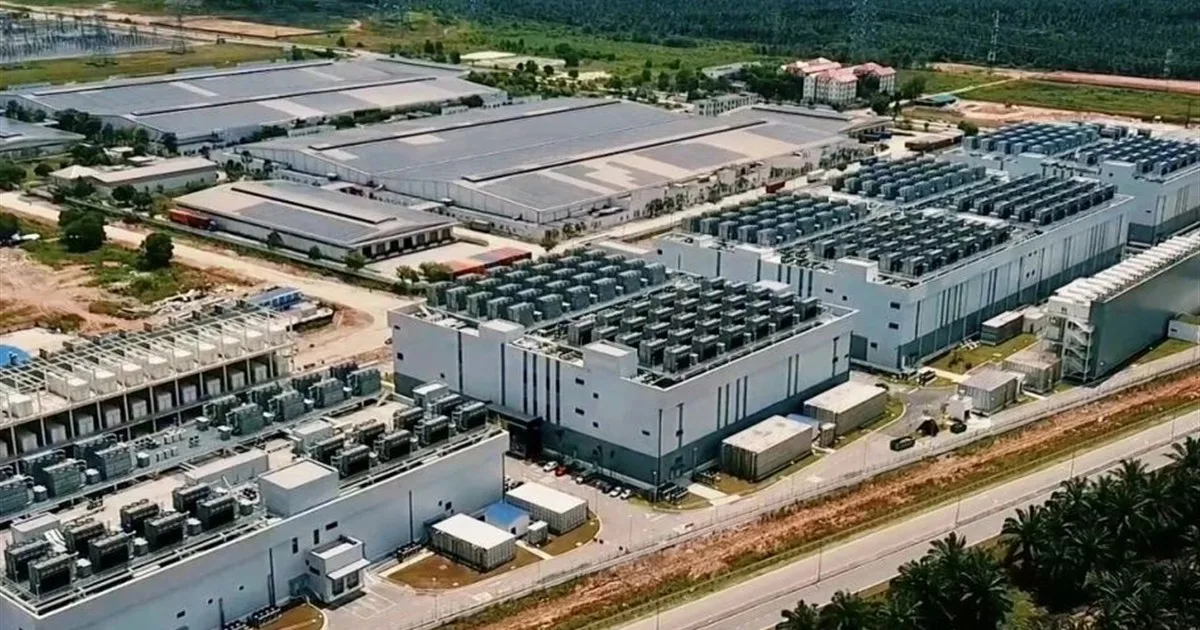
Banner: The MY06 data-centre campus in Johor Bahru. The image illustrates Malaysia's data-centre buildout and is not a photograph of all 27 approved projects. Photo: China State Construction Engineering Corporation Installation.