Getty Images has begun a prepackaged Chapter 11 process in the United States, moving ahead with a restructuring that would take the visual-media company private. The plan includes up to US$533 million in new equity from members of the Getty family and affiliates of Koch Equity Development.
The filing turns a restructuring agreement announced on 12 October into a court-supervised process. Getty says its operations, employees, contributors, partners, customers and vendors are expected to continue without interruption while the plan is considered.
Getty Images Chapter 11 Plan Moves Into Court
Getty Images said on Wednesday that certain US entities had commenced voluntary proceedings in the US Bankruptcy Court for the District of Delaware. The company is using a prepackaged plan, meaning major creditor groups negotiated the principal terms before the filing.
The company's 21 October announcement says the process will implement an agreement already supported by its main financial stakeholders. A US Securities and Exchange Commission filing describes the recapitalisation framework.
This is a financial reorganisation rather than a liquidation. Getty says it will keep licensing photographs, video and other content, and will continue paying employees and contributors in the ordinary course. Reuters reported that the filing formalises the plan unveiled more than a week earlier.
What the US$533 Million Investment Covers
The equity commitment is worth up to US$533 million. It includes debtor-in-possession financing and about US$100 million of existing debt held by the majority shareholders that would convert into equity when Getty emerges from Chapter 11.
Koch Equity Development is also providing up to US$143 million to support the process. Under the plan, Getty's revolving lenders would receive an amended US$150 million facility that is expected to be repaid and undrawn at emergence.
Holders representing 83.5% of Getty's unsecured bonds agreed to a reduction that would retire US$270 million of senior unsecured notes. The SEC filing says those notes would be exchanged for an aggregate cash payment of about US$170.2 million.
Existing Getty Images Shares Face Cancellation
The most direct consequence falls on current shareholders. Existing equity interests are expected to be cancelled, with holders receiving no property under the proposed plan. The Getty family and Koch-linked investors would own the reorganised company, subject to dilution from a management incentive plan.
Getty's shares had already moved to the over-the-counter market after the New York Stock Exchange began delisting proceedings. A separate SEC filing dated 1 October said the exchange acted because of an abnormally low selling price.
The company expects the restructuring to be completed by the end of 2026, although that timetable depends on court approval and other conditions. Creditors or other parties can still object, and the court must confirm the plan before it becomes effective.
AI Competition and the Failed Shutterstock Deal
Getty Images enters court protection at a difficult point for the commercial-image industry. Generative AI has widened the supply of inexpensive visuals, while customers are scrutinising licensing costs and provenance. Getty has responded with licensed AI products and partnerships, but the transition has not removed its debt burden.
The restructuring also follows the collapse of Getty's proposed combination with Shutterstock. The companies had pursued a merger intended to create a larger competitor in licensed imagery, but the deal faced regulatory resistance and did not close.
The pressure mirrors a broader question across technology markets: whether rapid AI adoption creates durable profits or simply forces established businesses into expensive reinvestment. BullBuzz has tracked that tension in the financing risks facing debt-heavy AI companies and the power delays affecting Microsoft's planned UK data-centre capacity.
What Contributors and Customers Should Watch
Getty says contributors and customers should see no immediate operational change. That assurance matters because publishers, brands and creators depend on continuing access to licensed archives and timely royalty payments.
The next milestones are the court's decisions on financing and the reorganisation plan. Contributors should retain contracts and payment records, while customers should monitor service notices and licensing terms. Investors should focus on the explicit treatment of existing equity rather than assume that a continuing business preserves the value of current shares.
The restructuring offers Getty fresh capital and lower debt obligations, but it also shifts ownership and leaves the business with the same competitive test: proving that trusted, licensed imagery can command sufficient demand in an AI-saturated market.
This report is for information only and does not constitute investment advice.
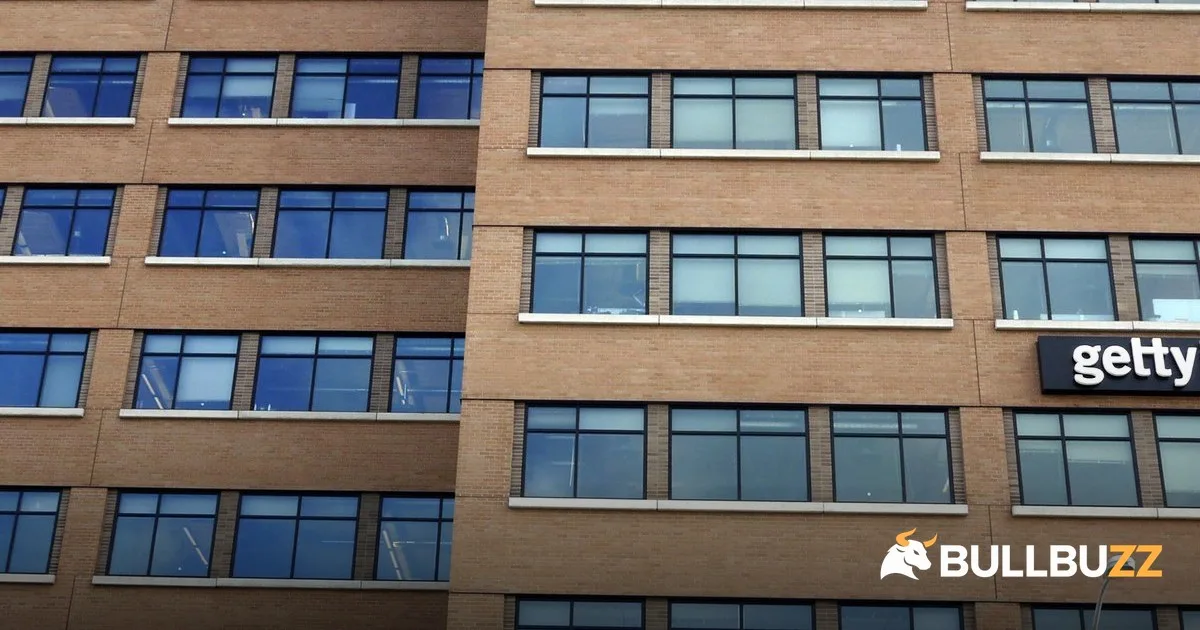
Photo: Getty Images' corporate headquarters in Seattle. Seattle Business Journal.