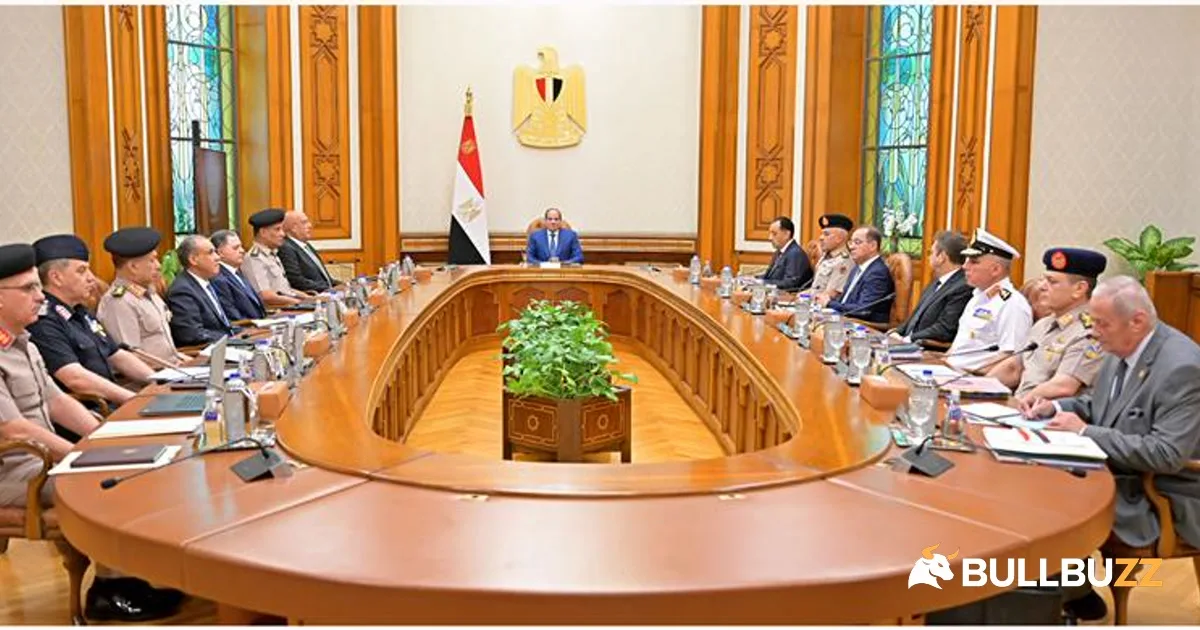
Egypt has pledged all necessary and possible support to help Saudi Arabia defend its security as Houthi missile and drone attacks intensify across the kingdom. The decision raises the prospect of a larger Egyptian role in a conflict already disrupting aviation, oil infrastructure and Red Sea trade.
Egypt's National Defense Council approved the commitment at a meeting chaired by President Abdel Fattah el-Sisi on 18 October. The Egyptian presidency said the support would cover Saudi security, stability, resources, territorial integrity and Islamic holy sites.
Egypt Backs Saudi Defense After Emergency Meeting
The council's statement did not specify whether Egypt would deploy troops, air-defense systems or logistical assets. That distinction remains central. Reuters reported that el-Sisi had requested an urgent parliamentary session to authorize the military to help if Riyadh formally asked for support. Parliamentary discussions were expected to continue on Monday.
The official decision has three parts:
- Full political solidarity with Saudi Arabia.
- All necessary and possible support for the kingdom's defense.
- More diplomatic work with regional and international partners to reduce tensions.
That leaves Cairo room to support Riyadh while continuing to press for de-escalation. Egypt previously joined the Saudi-led coalition that intervened in Yemen in 2015, but its combat role remained limited.
Houthi Attacks Raise the Regional Stakes
The announcement follows repeated Houthi attacks on Saudi airports and energy sites. The Associated Press reported that at least 19 people have been killed, thousands of flights affected and global markets rattled during the latest escalation.
BullBuzz has tracked the conflict's widening reach, including the latest Riyadh missile interception and the attack on a Saudi Aramco building in Dhahran. Those incidents pushed air defense, airport security and oil-market risk back to the center of investor attention.
The Houthis have also expanded pressure around Yemen's Red Sea coast and the Bab el-Mandeb Strait. That waterway is a key route between the Red Sea and the Gulf of Aden, making the conflict relevant to shipping schedules, insurance costs and Suez Canal traffic.
Why Egypt's Decision Matters for Oil and Shipping
Saudi Arabia is the world's largest oil exporter, and its airports, refineries and export infrastructure carry direct market significance. An Egyptian commitment adds one of the Arab world's largest militaries to the kingdom's pool of potential support, even though no deployment has been announced.
For Egypt, Red Sea security is also an economic issue. Disruption near Bab el-Mandeb can divert vessels away from the Suez Canal, reducing transit revenue and lengthening routes between Asia and Europe. Cairo therefore has a direct interest in protecting commercial navigation while avoiding a broader war.
Egypt and Saudi Arabia are also closely tied through trade and investment. Saudi Arabia's official DataSaudi portal recorded 2025 exports to Egypt of SAR43.1 billion and imports of SAR24.8 billion. The relationship gives both governments a financial reason to contain damage to transport, energy and regional confidence.
Diplomacy Continues Alongside Defense Planning
Egypt's statement paired the defense pledge with a call for peaceful solutions. Foreign Minister Badr Abdelatty discussed regional developments and de-escalation in calls with counterparts, while Al-Azhar called for an urgent mediation committee, according to the AP report.
Saudi Defense Minister Prince Khalid bin Salman also met UAE President Sheikh Mohamed bin Zayed in Abu Dhabi on Sunday. The Emirates News Agency said the talks covered regional security and cooperation.
The caution is clear: political support does not yet equal an Egyptian troop deployment. Cairo's next move depends on parliament, any formal Saudi request and the kind of assistance Riyadh seeks.
What Markets Should Watch Next
The immediate signals are whether Egypt's parliament authorizes overseas military assistance, whether Saudi Arabia requests specific support and whether Cairo identifies air defense or Red Sea security as priorities.
Investors will also watch for another strike on airports or energy facilities. BullBuzz's report on Houthi missile capabilities shows why interception pressure remains high, while the Aden palace attack underlined the danger to government sites inside Yemen.
A defined Egyptian support package would be the next material development. Until then, the council's decision is a firm political and defense commitment whose operational scope remains open.