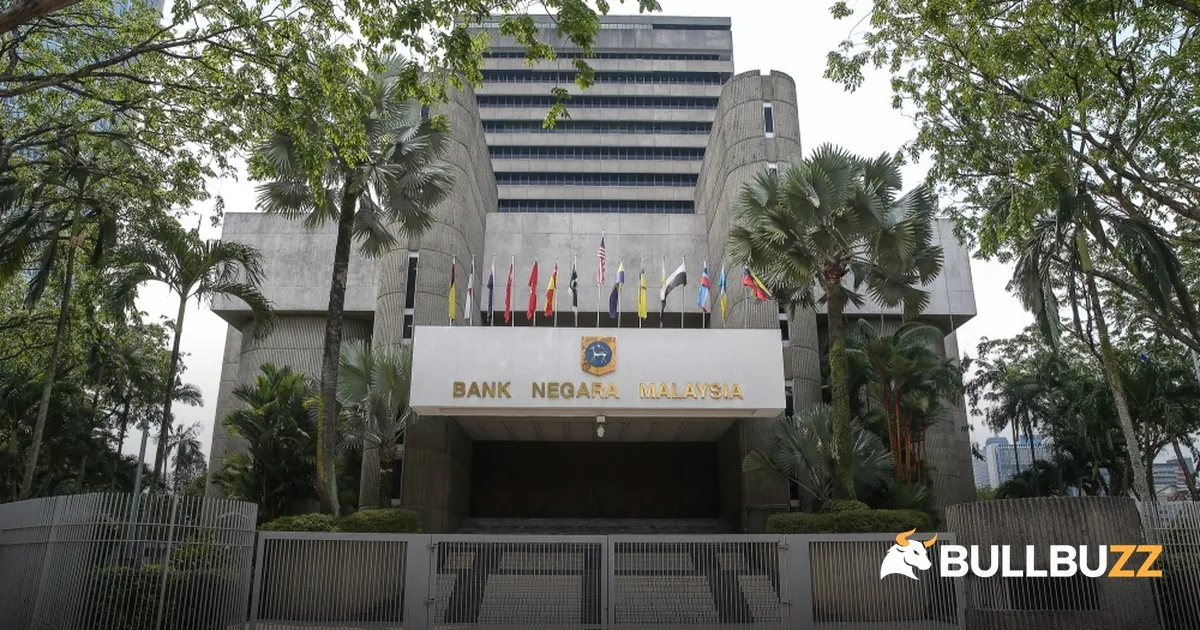
Bank Negara Malaysia has launched SSDS+, a new platform for issuing, holding and transferring tokenised bonds and sukuk. The central bank says the system can support wholesale securities as well as tokenised government and corporate retail bonds.
The launch moves Malaysia's digital-asset strategy into regulated market infrastructure. SSDS+ was developed in-house using cloud and distributed-ledger technology, then connected to RENTAS+, BNM's upgraded payment and settlement system.
According to Bank Negara Malaysia's launch statement, SSDS+ maintains ownership records and transfers tokenised securities. RENTAS+ handles the payment side in central bank money and is designed to provide secure settlement around the clock.
What SSDS+ Changes for Malaysia's Bond Market
Malaysia already has a large conventional bond and sukuk market. BNM Governor Abdul Rasheed Ghaffour said in September that the market had reached about RM2.35 trillion at the end of June 2026. SSDS+ adds a digital issuance and custody rail alongside the existing Scripless Securities Depository System.
Tokenisation represents a security as a digital record on a programmable ledger. The bond still carries familiar economic rights, including principal and coupon payments, but its ownership and transfer can be managed through digital infrastructure.
The practical opportunity is to reduce manual reconciliation across issuers, banks, custodians and settlement systems. A programmable security could also support automated coupon payments, compliance checks and transfers, although each feature will depend on the instrument's legal and technical design.
- Issuance: SSDS+ can support tokenised wholesale, government and corporate retail bonds.
- Custody: The platform records ownership and safekeeps digital securities.
- Settlement: RENTAS+ transfers the payment in central bank money.
- Availability: BNM says the combined infrastructure supports round-the-clock services.
Why Settlement in Central Bank Money Matters
A tokenised bond needs more than a digital ownership record. Buyers and sellers also need a trusted method to exchange cash and securities. Connecting SSDS+ with RENTAS+ is intended to keep the payment leg inside central-bank infrastructure rather than relying on a private crypto token or stablecoin.
The Bank for International Settlements says tokenised government bonds could improve market efficiency, but adoption depends on regulation, interoperability and reliable settlement. Its research counted about US$8 billion of issuance at the time of publication, showing that the market remained small compared with conventional debt.
A separate BIS report on wholesale central-bank money describes several ways to coordinate tokenised assets with safe settlement. The common objective is delivery versus payment: the asset changes hands only if the corresponding money transfer succeeds.
Malaysia's Tokenisation Push Is Moving Beyond Pilots
SSDS+ puts Malaysia among jurisdictions building operational public infrastructure for tokenised finance. BNM has also worked with the BIS Innovation Hub and other central banks on Project Rialto, which tested tokenised central-bank money in cross-border payment scenarios.
The direction also matches private-sector experiments. BullBuzz previously covered HSBC and Ant Digital's tokenised-deposit payment test and the NYSE tokenised-stock trading push. Malaysia's launch is different because it centres on sovereign market infrastructure and regulated bonds and sukuk.
The wider digital backdrop is substantial. Malaysia's digital economy reached RM476.8 billion in 2024, according to official data reported by BullBuzz. SSDS+ gives capital markets another channel through which that digital expansion could reach financing and investment.
What Investors and Issuers Should Watch
The launch statement does not identify the first issuer, transaction size, fee schedule or retail distribution model. Those details will determine whether SSDS+ quickly attracts meaningful issuance or begins with a limited group of institutions.
Investors should watch for the first tokenised government or corporate bond, the participating banks and custodians, and rules governing access to retail instruments. Issuers will focus on whether the platform cuts settlement time and administrative cost without creating new compliance burdens.
SSDS+ is a financial-market infrastructure launch, not a guarantee that tokenised bonds will immediately become mainstream. Its significance is that Malaysia now has a central-bank platform capable of taking those instruments from pilot projects into regulated issuance and settlement.
This report is for information only and does not constitute investment advice.
Photo: Bank Negara Malaysia headquarters in Kuala Lumpur. Yusof Mat Isa / Malay Mail.